Not another address in Bang Tao: from selling residences to operating lifestyles

Bang Tao has become one of Phuket’s strongest residential and lifestyle destinations, combining beach access with a growing concentration of hospitality, dining, retail, wellness and education. Its success has attracted both buyers and developers. But success has created its own challenge.
As more projects compete within the same location, the address itself becomes less distinctive. At the same time, recent Knight Frank research suggests that expectations of luxury residential property are moving well beyond square metres alone. The question is no longer simply where to build, but what gives people a reason to choose one project over another.
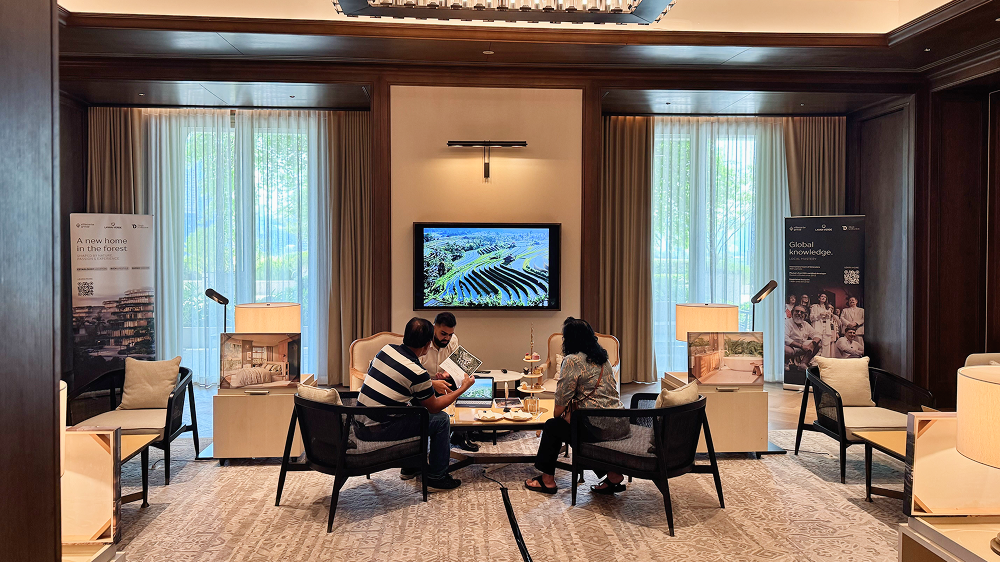
That was one of the questions explored during The Future of Luxury Tropical Living, a private media conversation hosted in Phuket by VillaCarte Group, founded in 2012 with a development portfolio exceeding 300,000 square metres and a combined GDV of approximately USD 940 million. The discussion brought together Vadym Bukhkalov, Founder of VillaCarte Group, and Mohammed Adib, Partner and Chief Design Officer at Dewan Architects + Engineers and Lead Architect of Layan Verde.
According to VillaCarte Group Analytics & Research, Bang Tao has 57 active off-plan condominium projects from around 30 developers, with 5,222 units in active sale. Premium is the largest category with 26 projects, followed by 11 Lux and four Lux+ developments. Together, these segments account for around 72% of active projects and 64% of units currently for sale.
Recent Knight Frank research suggests that luxury residential value is broadening beyond the residence itself, with themes including community, privacy, effortless service, complete ecosystems and enduring value. The harder question is how these expectations translate into a real development.
One visible response is the rise of branded and hospitality-led residences. In Phuket, branded condominiums have achieved an average price premium of around 28% over non-branded product. In Bang Tao, C9 Hotelworks identifies a 2026–2030 pipeline of nine hotels with 1,640 keys and nine branded-residence developments with 1,649 units, alongside new retail and international education infrastructure.
The almost equal scale of the hospitality and branded-residential pipeline points to a broader shift: Bang Tao is developing less as a collection of standalone projects and more as an integrated lifestyle district. Branded residences can address part of the new luxury brief — particularly service and access to a wider ecosystem — but not every question around differentiation, privacy, identity or long-term relevance.
During the discussion, VillaCarte presented Layan Verde as one example of how a developer can push that response further. The project combines 774 premium and luxury residences, two hotels, including one to be operated in partnership with Dusit International, and 65+ amenities and services within a mixed-use environment designed around hospitality, wellness, work, retail, dining and everyday needs.
But infrastructure alone does not make a project distinctive.
Community and infrastructure are important parts of the luxury proposition, but translate that broader brief into a real development. In a market crowded with polished façades and familiar resort typologies, visual luxury alone is becoming easier to replicate. This puts greater weight on the concept behind the project — and on how architecture creates identity and shapes the way people experience the place.
Sustainability was also an important part of the discussion. For VillaCarte Group, it is a basic ethical responsibility of development towards the island and its environment. The company applies this approach across its projects through resource efficiency, climate-responsive design and the integration of architecture and landscape — helping reduce environmental impact while supporting long-term performance and quality.
That brings the conversation back to enduring value. In an increasingly competitive market, the test of a luxury development is not only how it looks or sells at launch, but whether it remains relevant, well operated and valuable to the people who live there years later.
For Bang Tao, this may be the next stage of competition. Location will continue to matter, but the stronger differentiator may increasingly be what happens after the residence is sold: how the place is designed, connected, managed and experienced over time. In that sense, luxury development is moving from selling residences towards creating — and operating — lifestyles.
Related news